Irish folklore: Where myth meets reality on the Emerald Isle
Giants, fairies, selkies—oh my! Irish mythology is full of magic and legends, all with a hint of truth, a touch of history, and a place for you to visit in Ireland and see for yourself.

Ireland is full of magic, from the legend of Giant’s Causeway to the rituals around Hawthorn trees and holy wells. Ireland’s folklore developed to explain things like the surreal landscape, the Megalithic standing stones, and, of course, any turn of luck! The best part is that you can visit enchanted, mysterious, and legendary sites on tour with us, led by expert and local tour guides relaying all the tales. Whether or not you’re a believer, you won’t find any shortage of gorgeous views and unforgettable experiences on any of our Ireland tours. (Be sure to keep your eyes peeled for fairies!)

Why Ireland’s legends are still relevant today
Understanding Irish folklore helps travelers appreciate the history of Ireland
Ireland’s history is rife with trials like invasions and colonization, but through it all, one thing endures: the resilient spirit of the Irish people. Part of understanding that sense of pride, resistance, and prevailing optimism is to know the Irish myths. From the clever and ferocious giants to the deceitful and sometimes helpful fairies, the ancient people of Ireland explained bad luck, blessings, and mysterious natural formations using these stories. They learned how to work with the land, how to predict it, and when to leave it be, through Celtic mythology and Irish folklore.
Today, the landscape still reflects the same natural phenomena, from fairy mounds, which are ancient farmsteads reclaimed by nature, to the Giant’s Causeway, which was formed by volcanic activity. When you join any of our Ireland tours, you’re sure to understand why so many prevailing legends were born here. And the more Irish legends you know, the more you can see why these stories are still such an important part of Irish culture to this day.
See the top 10 things to do with a group in Ireland ➝

The legend of Giant’s Causeway
A tale of two giants
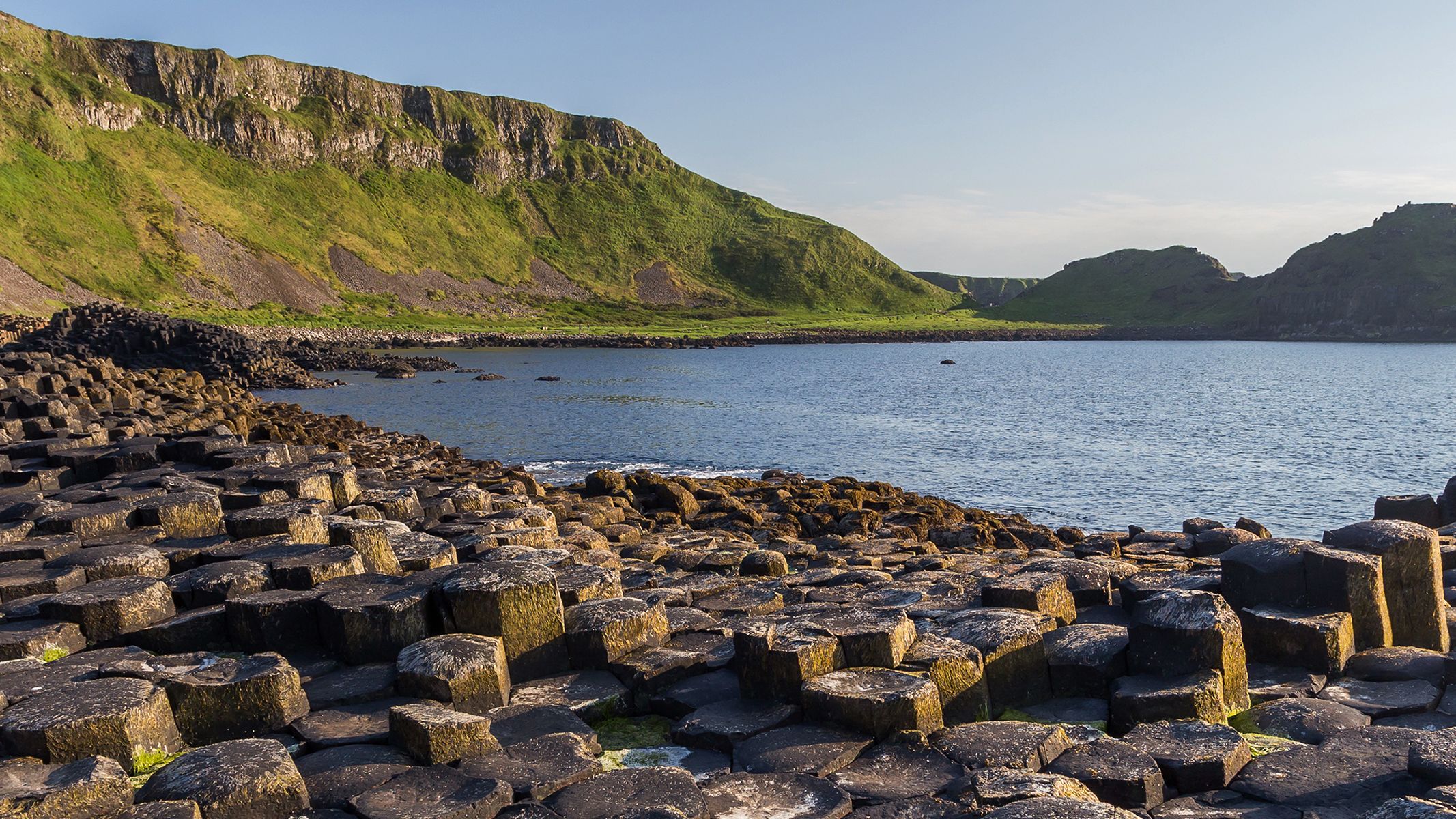
Legend has it that Irish giant Finn McCool built the Giant’s Causeway from Ireland’s shores to Scotland, wishing to fight the Scottish giant Benandonner. As he approached, Finn realized that his rival was much larger than he expected, and Finn couldn’t possibly win the fight. He ran home and devised a plan with his wife. They disguised him as a baby, so that when Benandonner came looking for his fight, he saw the size of Finn’s “baby” and believed that if the baby was that big, the father must be even bigger, and there was no way to best him in a fight. The McCool’s plan worked, and Benandonner fled back to Scotland, destroying the causeway as he went so that Finn couldn’t follow him. What we now see in Ireland is all that’s left of Finn McCool’s Giant’s Causeway.
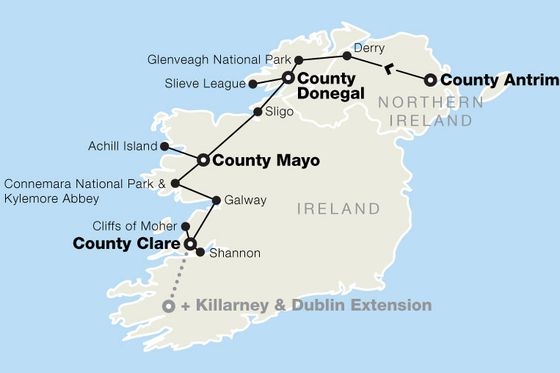
Add the Giant’s Causeway Cliff Walk excursion on our Ireland: The Wild Atlantic Way tour and pay the UNESCO World Heritage Site a visit. You’ll explore the visitor center, and, if you’d like, walk along the cliff with your expert Tour Director, who’s sure to tell you even more about the adventures of Finn McCool.
What you’ll see and experience at the Giant’s Causeway
- 40,000 interlocking basalt columns: These almost perfectly hexagonal formations were created by ancient volcanic activity—but when you see them in real life, you’ll understand why the ancients believed they were handcrafted.
- Stunning coastal views: The North Atlantic coastline, with its tempestuous waves crashing against jagged dark stone, is ripe for postcard-worthy photos.
- The visitor’s center exhibits: Immerse yourself in the legend and the geology through interactive displays and presentations.
- Pathways and guided tours options: The causeway is accessible for most fitness levels—just be sure to wear sturdy shoes with a strong grip to keep from slipping on the rugged terrain.
Learn more travel tips and myths for your visit to Giant’s Causeway ➝

Irish fairies and enchanted forests
Understanding Irish fairy folklore
No Irish folklore is complete without mention of the sidhe (pronounced shee), or fairy folk. They’re often featured in Celtic mythology, making appearances in Scottish folklore as well as Irish stories. Tied to forests, fairy mounds, bogs, and caves, these mystical creatures are seen as protectors of the natural world. Be warned that they’re as likely to be malicious as they are helpful and kind—depending on which one you come across!
Where to look for Irish fairies on tour
- Killarney National Park: Add the Killarney extension to our Ireland: The Wild Atlantic Way tour and we’ll bring you to admire the ancient oak woodlands and tranquil lakes. Here, you’ll find it easy to imagine Irish fairies in the mist.
- Hawthorn trees: Revered as good luck when near a home or a well, Hawthorn trees are a different story when standing alone. Those trees are said to be inhabited by the sidhe and must be left alone, lest you incur their wrath. Some stories even say a lone Hawthorn tree is a gateway to the land where the fairies dwell.
- Fairy forts (aka ring forts): Scattered across Ireland, these circular earthworks are believed to be fairy dwellings and are to be left untouched by humans. Prodding a fairy fort—seen as a portal to the fairies’ world—is said to bring bad luck, illness, and even death.
- Storytelling locals: Many communities keep Irish myths alive through storytelling nights and live music performed at pubs across the isle. Plus, your local guides are always happy to share Irish folklore with pride.
Looking for even more magic around the world? Check out these 10 mythical places you can visit ➝

Celtic mythology and the meaning behind its symbols
The Claddagh ring and other iconic Irish symbols
Comprising a simple design of two hands holding a crown-topped heart, the Claddagh ring represents love, loyalty, and friendship. The design spans centuries and has become a representation of Irish culture. You’ll see plenty of Claddagh rings and other Celtic symbols on any of our Ireland tours. Look for Celtic knots: There are many different types, and none of them has a beginning or end. Their different meanings include companionship, eternity, love, the cycle of life, and even the Christian Holy Trinity.
Where to see and learn about Irish symbols
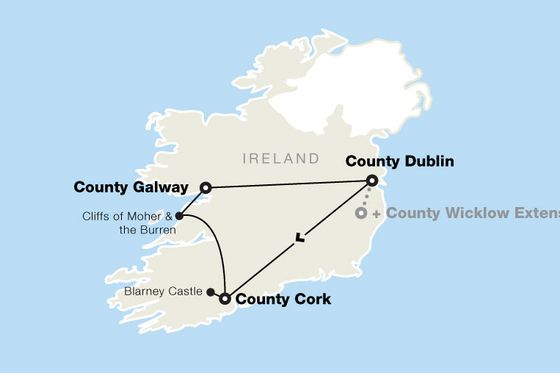
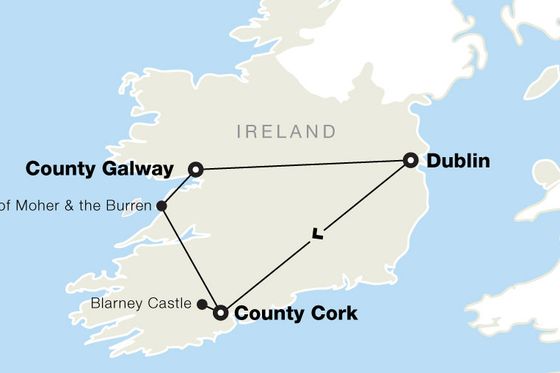
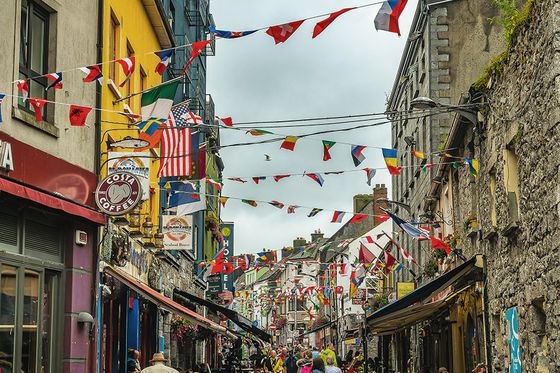
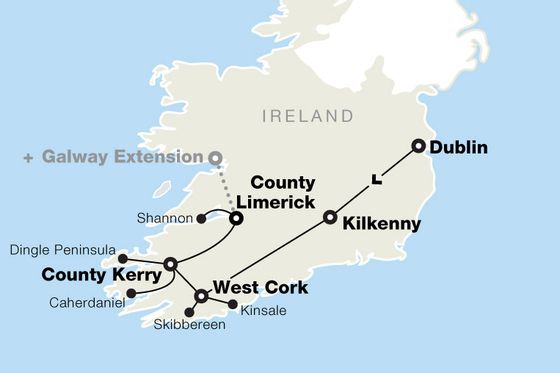
- The Claddagh village in Galway: Join our A Week in Ireland: Dublin, Cork & Galway tour, and you’ll go where the design was first crafted. Browse jewelry shops and meet local artisans to learn more about Celtic symbols.
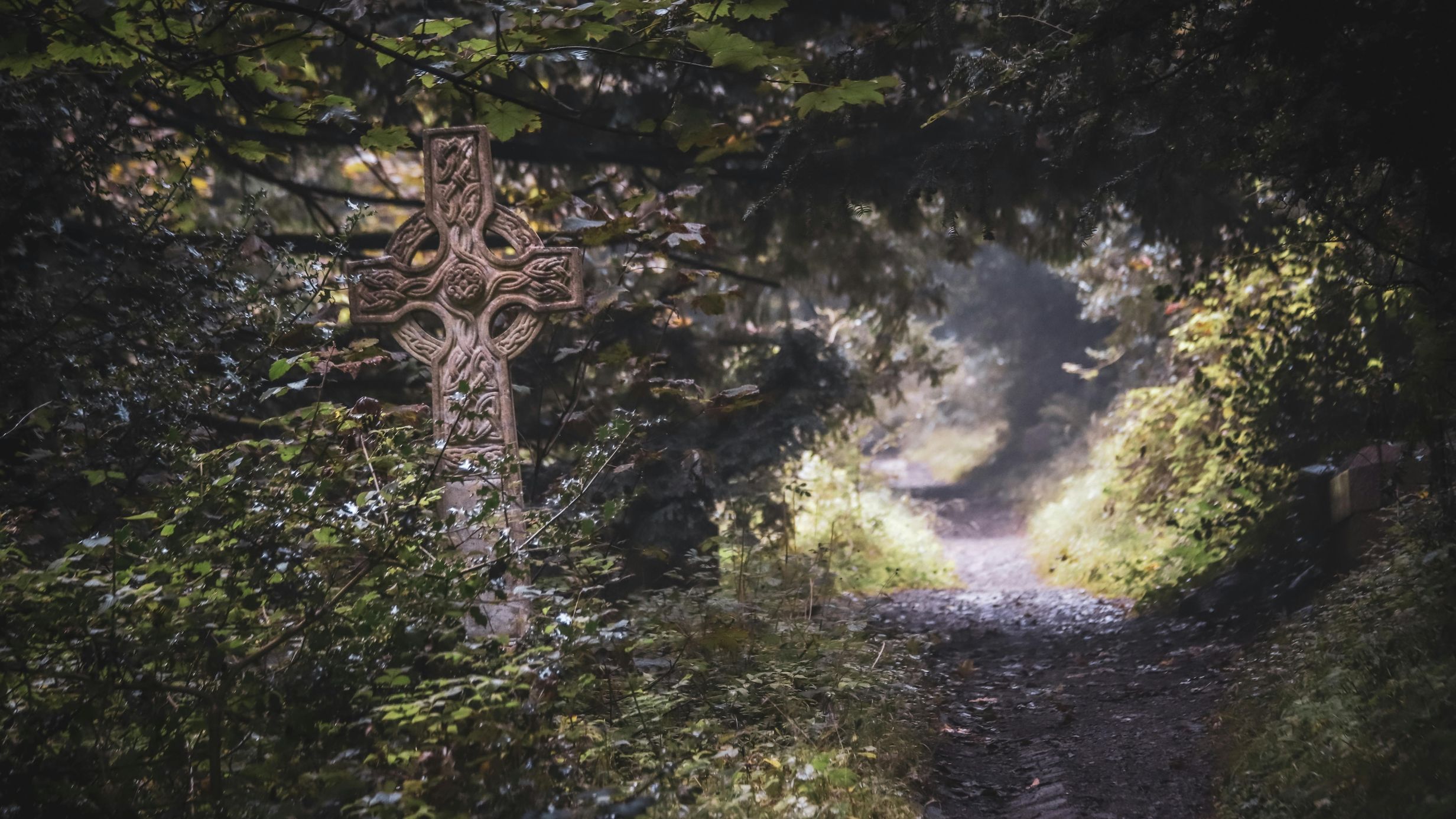
- Ancient stone crosses and monastic sites: Admire the intricate Celtic carvings that blend paganism with Christianity at sites like Glendalough and Clonmacnoise.
- Museums and cultural centers: Learn more about the meanings of Celtic symbols, their use in manuscripts like the Book of Kells, and their role in Irish culture at exhibits around Ireland.
- Shops and artisan markets: Support small and local shops by purchasing authentic handcrafted items. If you’re lucky, you’ll get to hear the stories behind the symbols from the makers themselves.
Is Galway on your Ireland itinerary? See the best way to spend 48 hours in Galway ➝

Irish castles and the legends that haunt them
Why Irish castles are the perfect setting for spooky stories
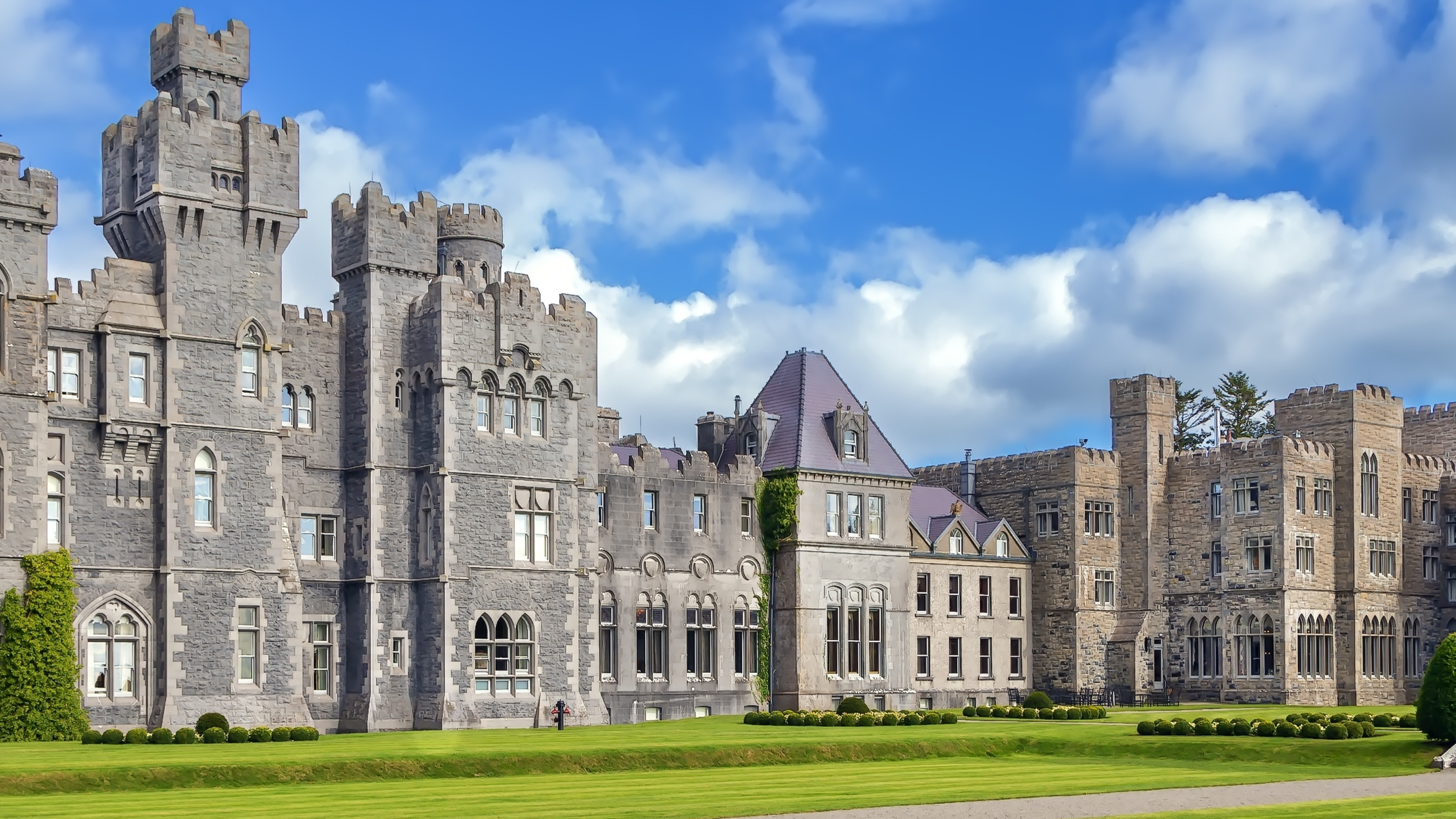
Steeped in history, battles, romance, and legends, Ireland’s castles are rich with stories and myths that are layered with lessons, promises, and mischief. Visit any castle on one of our Ireland tours if you’re ready to learn about the Irish medieval way of life, as well as banshees, spirits, and even slabs of stone that grant the gift of eloquence.
Irish castles and their legends that you can experience on tour
- Blarney Castle: Explore the medieval tower, dungeons, and battlements before wandering through the stunning gardens and kissing the famous Blarney Stone. If you kiss it, it’s said you’ll be rewarded with “gift of gab,” the power of eloquent, persuasive speech.
- Ross Castle: Legend has it that every May 1, chieftain O’Donoghue Mór rises from the Lough Leane inlet on a white horse. Anyone who witnesses his appearance is blessed with a life of good luck. Whether or not you spot O’Donoghue and his steed, you’re sure to understand the romantic ghostliness of Irish castles when visiting.
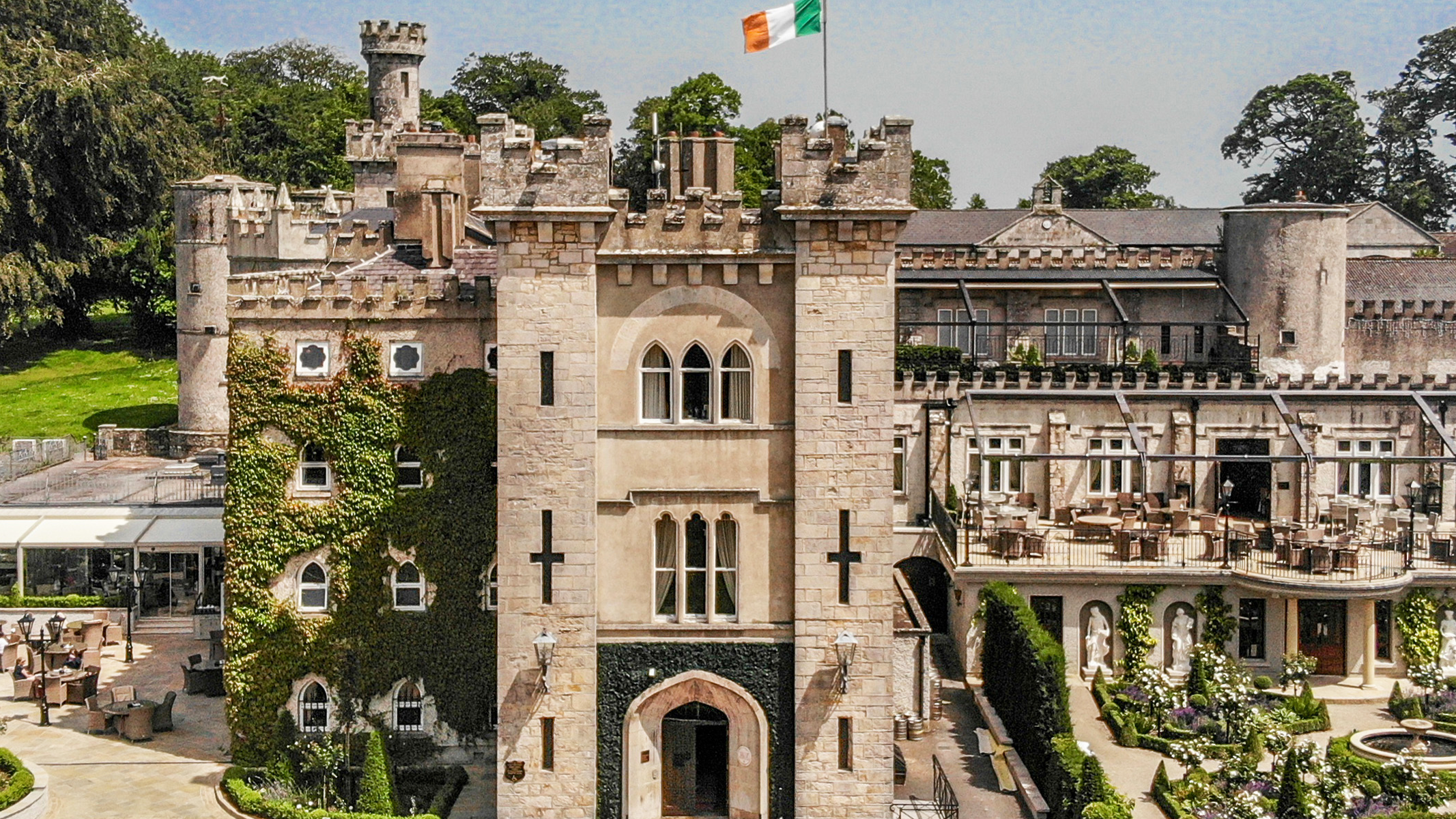
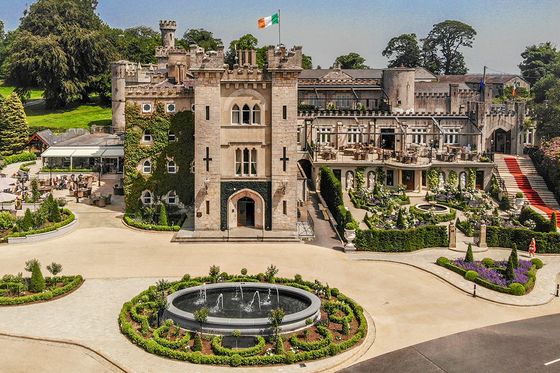
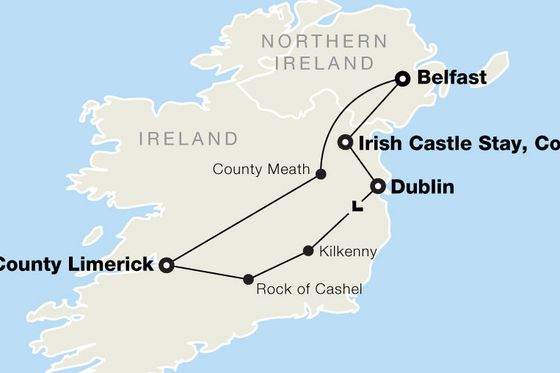
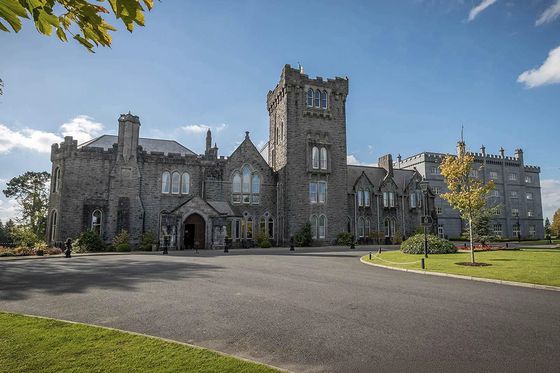
- Cabra Castle: Join our A Week in Ireland: Dublin, Belfast & Irish Castle Stay and spend the evening in Cabra Castle, a 19th-century castle-turned-hotel. The current structure was rebuilt in 1808, but the original (known as Cormey Castle) was built in the 1600s and destroyed in the Cromwellian War—so keep your eyes out for ghostly soldiers said to be walking the halls.
- Spirits of haunted castles: Being so ancient, it’s only natural that Ireland’s castles contain ghost stories and legends. When exploring, look for banshees—fairy women who appear to warn people of impending doom—and other restless spirits trapped in the great stone halls of Ireland’s history.

The Cliffs of Moher and the folklore of Ireland’s coast
Legends of the sea: the puca and other coastal spirits
Celtic mythology states that puca are shapeshifting creatures, sometimes described as goblins, found in rural and coastal areas of Ireland. Their intentions are sometimes good, but more often are mischievous—so consider yourself warned. Another famous Celtic mythological creature is the selkie, appearing in both Scottish and Irish mythology. Selkies take the shape of seals in the water, removing their seal coat to take human form when they want to explore the land. They’re neither good nor bad and are often featured in tragic stories of being trapped on land.
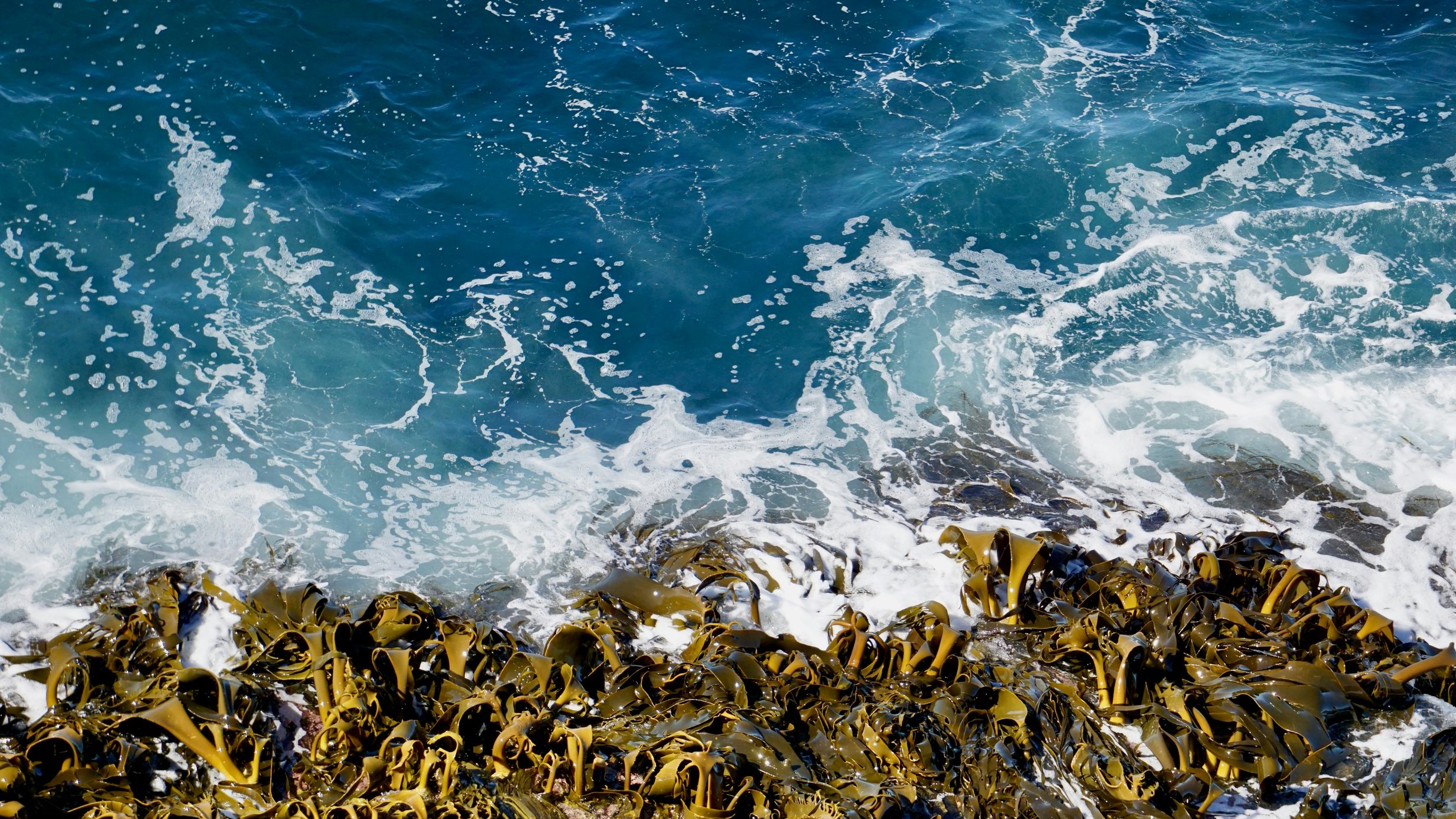
Join our A Week in Ireland: Dublin, Cork & Galway tour and we’ll take you right to the iconic Cliffs of Moher, where you can look out at the crashing Atlantic waves and try to spot a selkie in its seal form below.
What you’ll experience at the Cliffs of Moher
- Breathtaking views: 700-foot cliffs and sweeping ocean vistas give you a front-row seat to Mother Nature’s flair for the dramatic. You’ll leave with a sense of awe that only comes from standing at the edge of Ireland’s untamed coast.
- O’Brien’s Tower: Serving as a viewpoint since 1835, the historic tower provides panoramic views and exhibits that tell the story of the cliffs’ formation.
- Seabirds: Keep your eyes out for puffins, razorbills, and other seabirds that nest on the cliffs, adding even more life to the stunning landscape.
- Cultural significance: Learn the legends and myths of the cliffs, told by local guides as you stand at the site. Their stories will only deepen your appreciation of the Cliffs of Moher.
See five reasons why you’ll fall in love with Ireland’s Wild Atlantic Way ➝

Sacred wells, ancient stones, and the spiritual side of Ireland
The role of sacred sites in Irish tradition
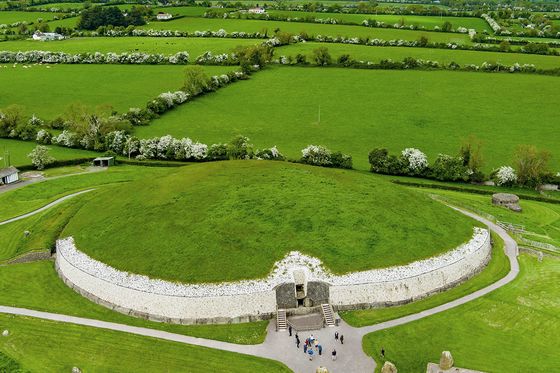
Ireland has no shortage of both naturally occurring and man-made stone monuments, and Irish folklore is incomplete without the mention of holy wells, which combine the two. Formed by Mother Nature and modified for easier access by humans, they’re believed to possess healing properties. The Emerald Isle also has ancient passage tombs: Neolithic and communal burial grounds that pepper Ireland—some of which you can still enter.
These sacred sites still hold meaning today because many pagan practices never truly left Ireland. Locals will still leave their sick loved ones’ clothes hanging on a “rag tree” near a holy well as an offering and plea for the well to heal them. In fact, holy wells are so often used that while some historians want to mark and preserve them, others argue that marking them off will prevent locals from practicing their religious rituals.
Sacred sites to visit on your Ireland tour
- Holy wells: With the same reverence you’d show when visiting a church, stop at a holy well for a blessing—but don’t forget to bring an offering in exchange. You’ll see what’s been left by other visitors; leave the offerings where they lie out of respect and superstition. Supernatural beings are generally quite possessive of their gifts.
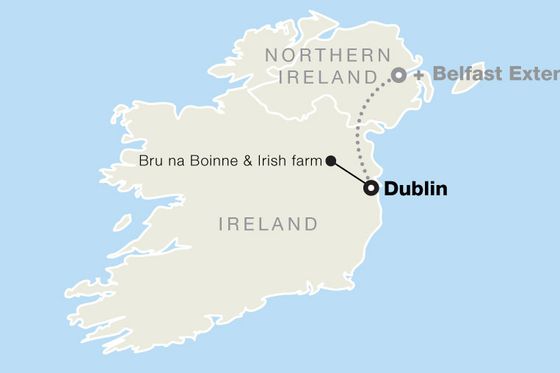
- Newgrange passage tomb: At 5,000 years old, Newgrange predates the Great Pyramids of Giza! And while all passage tombs are remarkably aligned with astronomical events, Newgrange is unique in that it’s illuminated inside by the rising sun on the Winter Solstice. Join us on our A Week in Dublin tour, and we’ll take you inside via the Visitor Centre, Bru na Boinne—it’s the only way to gain entry.
- Standing stones: Crafted by unknown creators (perhaps giants!), these Megalithic stones are often found in circles across Ireland. Their purpose can only be theorized, but some believe they mark a place of ritual, and archaeological evidence suggests they were burial sites. Like passage tombs, standing circles align with celestial events, adding to their otherworldly mystique.
- Rock of Cashel: Said to be the site where St. Patrick both converted the King of Munster to Christianity and faced Satan himself, this is a fortress atop a stone rising on an otherwise flat plain. Legend says the devil bit into the mountain as he fled St. Patrick, chipping his tooth, which he spat onto the plain as he left. Perched on that “tooth” is a castle that you can still visit today.
FAQs
Thea fell in love with travel as soon as she arrived in Venice, Italy on a family trip as a child. Since then, she has made having adventures around the world a priority, with trips like retracing her grandfather’s steps through WWII, climbing glaciers in Alaska, and horseback riding in Iceland. Thea is a nomad at heart, always planning the next trip. In her off-time she is working on a novel inspired by the woman she was named after, mixing cocktails, and watching any procedural crime show she can find.