Determined to go: How travelers from the U.S. and Canada are navigating an uncertain world

A lot has changed in the world over the last year: Tariffs and trade tensions have reshaped the economic conversation, geopolitical fault lines have widened, and, for American travelers, the question of whether they’re truly welcome abroad has never loomed so large. Against that backdrop, EF Go Ahead Tours posed a question to travelers:
What does international travel actually feel like right now? Not for industry analysts or TV talking heads, but for the real people planning their next adventure?
The answer—drawn from 1,200 survey respondents across the United States and Canada in May 2026 in a study conducted by EF Go Ahead Tours and Qualtrics Research—is nuanced, honest, and, ultimately, hopeful.
Yes, travelers are grappling with new anxieties. Yes, they’re making different calculations than they were a year ago based on fuel costs, safety, or other factors. But their desire to see the world has not dimmed. If anything, many of the high-intent international travelers we spoke to seem more resolved than ever to make their journeys count.

The urge to continue traveling is alive and well
Despite the headlines, the departure boards are full. In our survey of 1,200 high-intent travelers from the U.S. and Canada, 75% confirmed plans to travel internationally in the next one to two years. Another 24% said they’d consider it. Less than 1% said no.
More tellingly, these aren’t armchair travelers—73% of respondents had already traveled internationally in the past 12 to 24 months. The desire to go is matched by a track record of actually going.

Travelers are willing to spend more on travel in 2026
These travelers are not bargain hunters. The largest single segment—32%—budgets between $4,000 and $5,999 per person for their next international trip. Another 21% plan to spend $6,000 to $7,999, and 18% are prepared to invest $8,000 or more. In all, 39% of travelers have a per-person budget of $6,000 or more.
The direction of spending tells an even stronger story: 46% of travelers say they’re prepared to spend more on travel this year than last. Only 8% plan to spend less.
For travel advisors and tour operators, the question is not whether these travelers have money to spend—it’s whether the industry is providing enough value to earn it.

Where in the world are travelers headed?
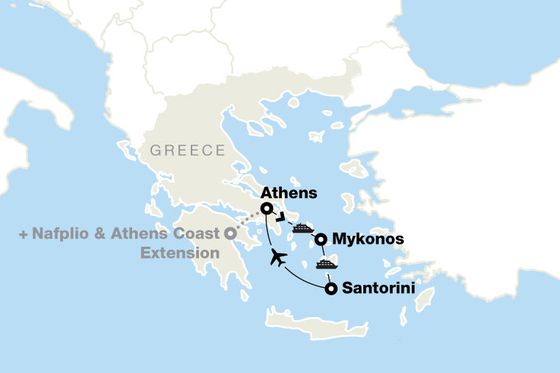
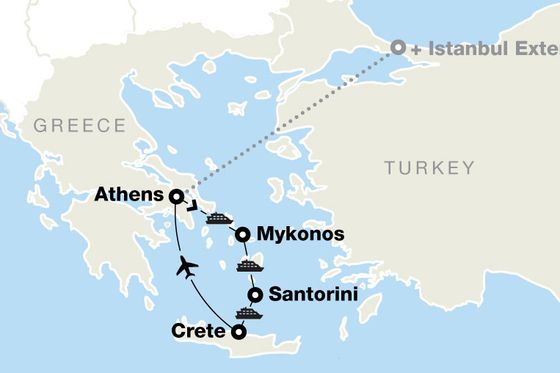
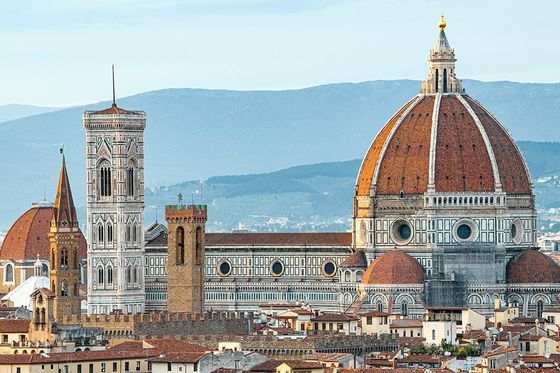
Asked where they most want to go, 20% of these travelers said southern Europe is their first choice. Destinations like Italy, Greece, Spain, and Portugal offer distinctive experiences with every return trip and generate relentless buzz—inspiring travelers to go.
Mexico and the Caribbean follow at 15%, appealing to travelers seeking warmth, accessibility, and value. Central and western Europe (11%) and the U.K. and Ireland (11%) round out the top four. Asia comes in at 9%, while Australia, New Zealand, and the Pacific (8%) attract bucket list travelers.

When it comes to travel style, 57% of these travelers prefer a mix of cities and natural landscapes—perfectly aligned with the dual appeal of destinations like Italy’s Amalfi Coast, New Zealand’s South Island, or Japan, which is home to ancient capitals and mountain scenery. Only 7% want nature exclusively.
Canada and the US: Is the neighborly chill thawing?
One of the most closely watched storylines in North American travel has been the dramatic cooling of Canadians’ interest in visiting the United States. Political tensions, trade friction, and a sharp rise in national sentiment north of the border produced a measurable and historic pullback that EF Go Ahead Tours documented in its inaugural Traveler Index in 2025.
Volume II revisits the question with fresh data, and the results suggest a market in transition.

Among those in Canada who responded, 20% are very interested in traveling to the U.S. in the next 12-24 months, with another 19% somewhat interested, putting total positive interest at 39%, up from just 13% a year ago. The sharpest period of backlash may have passed.
But the picture is not of a full recovery. Half of Canadian respondents remain disinterested in U.S. travel, and that resistance might endure. The traveler anger hasn’t dissolved; rather, it has softened at the edges. For travel brands on both sides of the U.S.-Canada border, the door is more open than it was a year ago. The question is whether the industry can step through it.

America’s 250th anniversary is boosting interest in US travel
In 2026, the United States marks its 250th anniversary, a major milestone that’s already reshaping domestic travel—and travelers are deeply engaged with it. Across our full survey of 1,200 respondents, 73% said they would be interested in tours specifically focused on American history. Only 16% expressed disinterest in history.
Which eras of American history captivate travelers most?
Among respondents interested in travel centered around U.S. history, 48% specified an interest in the period of the American Revolution—fitting, given that 2026 is the year of America’s 250th. Civil War and Civil Rights history follow closely, and the combination of the Gilded Age, the Roaring 1920s, and WWII history round out the list of most-requested themes.

The founding cities are drawing crowds
Despite strong familiarity with New York City (70% of respondents have visited) and Washington, D.C. (65% have visited), most travelers have never set foot in the places where American independence was actually born. Only about half have visited Boston (51%) or Philadelphia (49%). Fewer than 20% have visited Valley Forge, in Pennsylvania; Lexington and Concord, in Massachusetts; or Yorktown, in Virginia.
Bringing travelers to these lesser visited destinations, however, is no problem for tour operators. It’s an opportunity. America’s 250th gives tour operators a sustained, culturally resonant backdrop to introduce travelers to destinations they’re historically curious about but haven’t yet experienced. Food tastings lead interest in both Boston (44%) and Philadelphia (40%), confirming that culinary experiences belong in every heritage itinerary.
Ireland and France are two destinations in high demand
Ireland and France, two of the world’s most beloved touring destinations, emerged with extraordinary appeal in Volume II of the Traveler Index. These aren’t vague bucket list wishes. Travelers know exactly where they want to go, why they want to go, and what they want to do when they get there.

Ireland’s allure extends far beyond Dublin
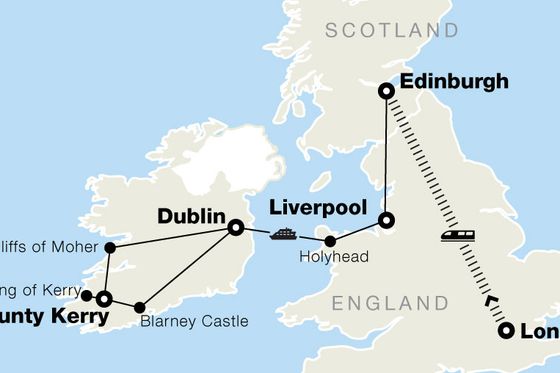
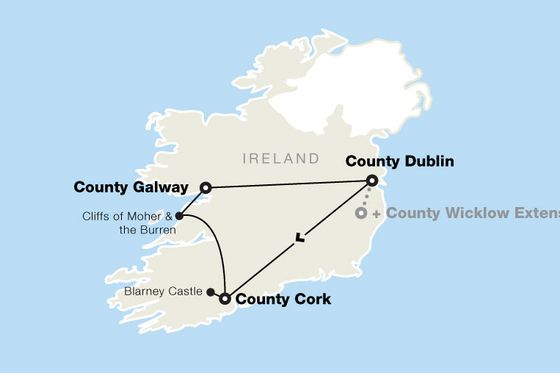
Asked where beyond Dublin they’d most want to visit in Ireland, travelers named two places more than any others: Blarney Castle led at 45%, followed closely by Belfast and Derry, in Northern Ireland, at 42%. The Cliffs of Moher ranked third at 38%, Killarney at 37%, and Galway at 33%.
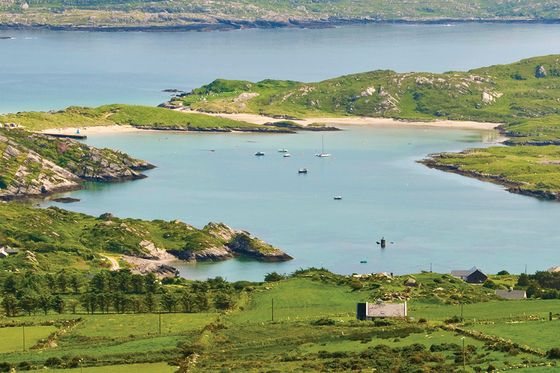
What motivates travelers’ interest in visiting Ireland beyond Dublin? Landscapes narrowly edged out history as the top motivator (59% versus 57%), which is a signal that Ireland’s dual identity as a place of both natural beauty and deep historical resonance is fully intact. Food and drink ranked third at 49%, well ahead of music, arts, and culture at 43%. Family heritage drew 32%, reflecting the Irish diaspora’s persistent pull on American travelers.
)
Guinness’ appeal points to the importance of pub experiences in Ireland
We’re in the business of asking important questions. Among them: Is Guinness, the stout that’s inextricably tied to Ireland’s identity, actually good? It’s a question for the ages, and more deeply connected to tourism in Ireland than one might think.
Half of travelers—50%—replied with a firm “Yes” to enjoying Guinness. Another 28% said they’d never tried one but would be open to it. Combined, 78% of travelers are either Guinness enthusiasts or willing converts—a data point suggesting that the Irish pub experience is not merely a travel cliché but a genuine draw that belongs on every Ireland itinerary.

France appeals to travelers for more than just Paris
France’s regional appeal extends well beyond Paris. The French Riviera leads, with 48% of respondents expressing interest in the region, followed by the French Alps (47%) and Normandy (44%)—a testament to how deeply the D-Day story resonates with North American travelers. Nice, Bordeaux, and Provence round out the six destinations in France travelers are most interested in visiting.
What interests attract travelers to France? Food tops the list at 55%, making France’s culinary identity the single strongest draw. French culture follows at 51%, iconic landmarks like the Eiffel Tower and Notre-Dame Cathedral at 49%, and French history at 45%. Only 6% of travelers said they wouldn’t visit France—reaffirming its status as one of the most universally desired destinations on earth.
Safety in focus: A destination-by-destination calculation
Perhaps the most striking finding in this year’s survey is the degree to which safety has come to shape how travelers think about the destinations they visit. When asked directly whether they have safety or security concerns about international travel, 78% said yes, or “it depends on the destination.” Only 23% reported having no concerns at all.

The nuance matters here. More than four in 10 travelers (41%) expressed broad concerns about international travel in general, while 37% took a more destination-specific view. This isn’t a cohort that is uniformly afraid. It’s a cohort that’s become more discerning—doing the research, weighing the headlines, and making deliberate choices about where they go.
Crime and personal safety top the list of travelers’ specific concerns at 60%, followed by political instability (51%) and terrorism (47%). One of the most telling findings: 37% of travelers with safety concerns cite anti-American sentiment as a worry. More than one in three are concerned about how they’ll be perceived abroad—a timely and real anxiety that group travel experiences are uniquely positioned to address.
Traveling with a community, in the care of local guides and culturally sensitive tour operators, has always been one of the best antidotes to feeling like a stranger in a strange land.
Cultural travel: Learning through exploration
Travelers aren’t simply chasing beaches and photo opportunities when they travel. When asked how important it is to learn about the history and culture of places they visit, respondents answered in a way that reveals a deeply curious, intellectually engaged travel community.
Of all respondents, 58% say cultural learning is very or extremely important; 36% say it’s very important; and 22% say it’s extremely important. Another 22% rate it as moderately important. Fewer than one in five travelers view cultural depth as incidental to a trip.

This enthusiasm for cultural learning helps explain the destination preferences revealed throughout this survey. Southern Europe, the U.K., Eastern Europe, and Asia aren’t just beautiful; they’re historically layered in ways that feed the curious traveler’s appetite. The castle on the hillside, the ancient Roman aqueduct, the cathedral with a thousand years of history: For the majority of our travelers, these landmarks and the history they represent aren’t incidental features, but the whole point.
The desirability of the one-week, unpack-once vacation
American and Canadian travelers are carefully managing their paid time off, with return-to-office becoming more the norm, and “bleisure” (the practice of combining business trips with personal vacation time) and digital nomadic travel waning.
Of travelers we surveyed, 76% said a weeklong, single-city, international tour sounded appealing. When we asked why, the top answer wasn’t about price, or even the destinations themselves. It was the idea of checking into one hotel, unpacking once, and actually settling in somewhere; 53% of travelers say the most appealing aspect of a weeklong international trip is staying in one hotel and unpacking once.
This level of interest in the concept of a weeklong tour—a deeper dive into learning more about one city—says something real about where travelers’ heads are right now. They’re more purposeful with their time, less interested in racing through multiple cities or countries in eight days, and hungry for something that actually feels like immersion.
That’s not a niche preference. It’s a fundamental shift in what people want from guided group travel: one hotel, smaller groups, access to experiences you genuinely can’t replicate on your own, and enough free time to make a city feel like home for a week.
What inspires a traveler to book?
Travel begins long before the reservation is made. It starts in the imagination. We asked travelers what most persuades, inspires, and gives them the confidence to book, and the results reveal a fascinating blend of personal relationships, digital media, and cultural touchstones.
Word of mouth from trusted people remains the single most powerful driver of travel decisions—a finding that underscores the importance of creating experiences so good that travelers can’t help but share them. Recommendations from friends and family top the list at 56%. Review websites follow at 36%, and travel agents or advisors at 32%.
Perhaps the most interesting finding is the power of entertainment media to inspire travelers to book: 25% of travelers say TV shows have inspired them to book a trip to a destination, and 21% say movies have done the same. HBO’s smash hit series “The White Lotus” topped the list of shows that inspired travelers’ booking choices, and its stunning filming locations in Hawaii (Season 1), Sicily (Season 2), and Thailand (Season 3) were cited as direct inspiration. The Netflix series “Emily in Paris” follows close behind. Other frequently mentioned TV series include HBO’s “Game of Thrones,” and CNN’s “Anthony Bourdain: Parts Unknown,” and “Stanley Tucci: Searching for Italy.” When it comes to movies, travelers find inspiration in “The Lord of the Rings” and “Eat, Pray, Love.”

Travelers are serving as brand ambassadors
In the age of the online review, every traveler wields potential influence, and they’re enthusiastic: 58% say they write reviews often or after every trip, and 21% post after every single journey. Google is the preferred review platform among people surveyed, at 37%, followed by TripAdvisor (30%) and major online travel agencies like Expedia and Booking.com (24%).
The implication is clear: The lived experience of the trip doesn’t end at the airport. It lives on in a review read by hundreds, or thousands, of future travelers making their own booking decisions. The best travel experiences aren't just sold. They’re retold.
Luxury travel preferences: Comfort, location, and character
What does luxury mean to the modern traveler? On a 1-100 scale measuring travelers’ accommodation spending philosophy and ranging from budget to maximum luxury, the average score across all 1,200 respondents was 67.9. These travelers lean toward luxury, are prepared to spend, and define luxury on their own terms.
When rating interest in 10 different accommodation types, travelers gave highest marks to experiences that are immersive and distinctive. Cruise ships and castle stays—trips whose accommodations are the experience—top the list. Overnight trains with sleeping carriages rank third. Boutique and independent hotels follow, with chain properties coming in sixth.

And for travelers choosing where to stay, comfort reigns surpreme at 65%—far ahead of any other priority. Location follows at 45%, and experience at 36%. Luxury as an explicit priority ranks just fourth at 24%. The message: These travelers want to feel well cared for and physically at ease, in a place that tells a story about where they are. Standard or generic accommodations, regardless of their star rating, aren’t the draw.
The main takeaway: Travelers are determined to go
The Go Ahead Traveler Index Vol. II tells the story of a travel community that is neither paralyzed by uncertainty nor naively ignoring it. These are thoughtful, experienced, financially comfortable people who have traveled before and intend to travel again. They’ve sharpened their calculations, sought out human expertise, and arrived at a clear conclusion:
The world is complicated. It always has been. These travelers know that, and they’re going anyway.
At EF Go Ahead Tours, we’ve always believed that the world is best seen together. This survey reinforces that belief. Even now, when borders feel less certain, headlines feel more alarming, and the economics of travel feel less predictable, people are raising their hands and saying, “I want to go.”
The job of the travel industry is to meet that desire with the expertise, care, and structure that turns aspiration into experience. The data suggests a traveler community that is ready to be reassured, guided, inspired, and supported throughout their journey. That’s exactly what we’re here for.
Methodology and media contacts
The EF Go Ahead Tours Traveler Index Vol. II was conducted in May 2026 in partnership with Qualtrics Research. A representative sample of 1,200 respondents from the United States (85%) and Canada (15%) participated, screened to include only those intending to travel internationally within the next 12 to 24 months. The survey covered travel intent, past travel behavior, destination preferences, budgets, booking methods, economic factors, geopolitical impact, safety perceptions, cultural learning priorities, travel inspiration sources, travel advisor use, and post-trip review behavior. Percentages may not sum to 100 due to rounding or multi-select questions.
For media, researchers, or other interested parties: Please contact Brian Hoyt of EF World Journeys at brian.hoyt@ef.com.