Japan for Women: Tokyo, Ise-Shima Peninsula & Kyoto
11 days | 14 days with Hiroshima & Kobe extension |
- Group size
- 15–28 travelers

Black Friday priority access: Save up to $800 by 10/15
Top deals will sell out, so lock in your spot now for just $99 down with AutoPay.†
Experience Japan’s shrines, street style, and sisterhood on a women-led tour.
With women by your side and a female Tour Director leading the way, this journey through Japan is designed to be as empowering as it is unforgettable. From Tokyo’s boundary-pushing fashion scene to the quiet reverence of Kyoto’s shrines, every stop invites you to explore, connect, and discover. You’ll share lunch with the women of the legendary ama pearl divers, learn the precise art of ramen and tea, and reflect at Hiroshima’s Peace Memorial (if you add the tour’s extension). Whether you’re wandering through Shibuya or watching a Maiko performance in Kyoto, this trip is about meaningful moments, shared stories, and seeing Japan through a lens that celebrates women’s curiosity and cultural contributions.
Your tour package includes
- 9 nights in handpicked hotels
- 9 breakfasts
- 1 lunch
- 3 dinners with beer or wine
- 2 tastings
- 9 sightseeing tours
- Expert Tour Director & local guides
- Private deluxe motor coach
- 1 train ride
Included highlights
- Tokyo’s dynamic Shibuya and Harajuku areas
- Yayoi Kusama Museum
- Japanese tea ceremony
- Indigo Dyeing Workshop
- Ise Jingu Naiku inner sanctuary
- Ama pearl divers meeting
- Historic town of Omihachiman
- Guided meditation session
- Kodaiji Temple visit
- Fushimi Inari shrine
- Farewell dinner & Maiko performance
Itinerary
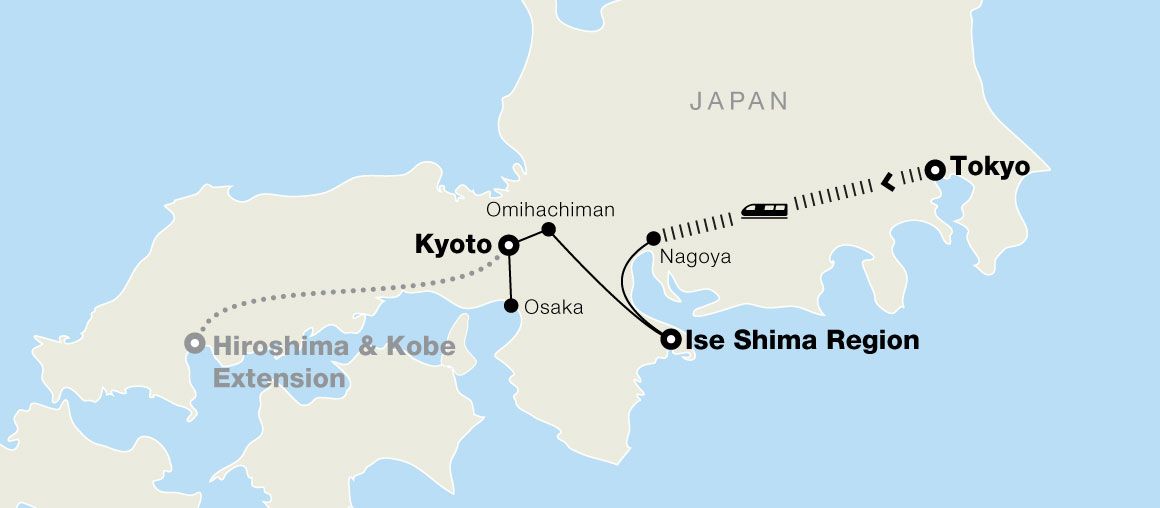
Overnight Flight1 night
Day 1: Travel day
Board your overnight flight to Tokyo today.
Tokyo3 nights
Day 2: Arrival in Tokyo
Welcome to Japan! Transfer to your hotel and settle in. Then, meet your Tour Director and female groupmates at a welcome mixer before calling it a night.
Day 3: Sightseeing tour of Shibuya & welcome dinner
Included meals: Breakfast, Welcome dinner
Join a local guide and explore Tokyo through the lens of fashion, art, and female empowerment. This curated experience highlights the stories of influential women and the vibrant style scenes that shape the city’s cultural identity.
- Start at the Imperial Palace, the symbolic heart of Japan. Learn about the women of the Imperial family, including Princess Mako’s historic abdication in 2021 after marrying a commoner.
- Visit the Yayoi Kusama Museum and immerse yourself in the world of one of Japan’s most iconic female artists. Her bold, polka-dotted works explore themes of infinity, identity, and the female psyche.
- Walk through Omotesando, Tokyo’s “Champs-Elysées,” known for its elegant architecture and high-end fashion boutiques.
- Continue to Urahara and stroll along Cat Street, the birthplace of Tokyo streetwear. Discover Ura-Harajuku’s edgy, youth-driven fashion scene that has influenced global trends.
- End the walking tour in Shibuya, one of Tokyo’s most energetic districts. Take a group photo at the iconic Scramble Crossing, where hundreds of people cross from all directions in a mesmerizing urban dance.
Later this evening, get to know your fellow female travelers during an included welcome dinner, served with beer or wine.
Day 4: Women's sightseeing tour of Tokyo & tea ceremony
Included meals: Breakfast, Tasting
Embark on a women’s-themed journey through Tokyo alongside your Tour Director, where tradition and creativity meet in the heart of Japan’s capital. This immersive experience blends cultural discovery, hands-on artistry, and moments of connection with fellow travelers.
- Begin in the historic Shitamachi area, where Tokyo’s old-world charm still thrives. Think: narrow alleyways, small shops that have stood the test of time, and a quiet contrast to the rest of Tokyo’s go-go-go nature.
- Enter Senso-ji, Tokyo’s oldest Buddhist temple—and, with its five-story pagoda and red-and-white facade, one of the most photographed, too.
- Walk through Nakamise, a lively shopping street lined with nearly 90 stalls selling traditional snacks, souvenirs, and crafts.
- Visit an indigo dyeing workshop to learn the centuries-old art of Japanese indigo printing. Try your hand at dyeing a cloth or bag—your first handmade souvenir from Japan.
- Take part in a tea ceremony this afternoon. You’ll join a tea master to learn about all aspects of this centuries-old practice, like the importance of each utensil used, the meaning of the symbolic gestures made while sipping your brew, and the inclusion of wagashi, or traditional Japanese sweets.
The rest of the day is yours to spend however you'd like, with plenty of free time to explore Tokyo at your own pace. You might choose to visit teamLab Planets, an immersive digital art museum that blends light, water, and movement—or head to Daikanyama, a stylish neighborhood known for its indie boutiques, cozy cafes, and laid-back vibe.
You can also personalize your trip with our optional dinner cruise this evening. After boarding a yakatabune, or houseboat, you’ll dine on traditional Japanese specialties as you float across Tokyo Bay and the sparkling skyline.
Ise Region2 nights
Day 5: Train ride to Nagoya, Ise Jingu Shrine & transfer to Ise Shima region
Included meals: Breakfast, Dinner
Board one of Japan’s iconic high-speed trains and make your way from Tokyo to Nagoya, watching the scenery shift from urban sprawl to countryside charm. Upon arrival, your Tour Director will lead you to one of Japan’s most sacred and storied sites before continuing on to the peaceful Ise Shima region—known for its rugged coastline, pearl cultivation, and spiritual heritage.
- Begin with free time for lunch at Okage Yokocho, a charming, Edo-style street lined with traditional shops and eateries leading to the shrine.
- Walk across the symbolic Uji Bridge and enter the Naiku Shrine, the inner sanctuary of Ise Jingu. (Dating back to the fourth century, Naiku enshrines Amaterasu Omikami, the sun goddess and supreme deity of Shinto.)
Continue on to your hotel in the Ise Shima region and take time to settle in and freshen up. Reconvene with your group for tonight’s included dinner, served with beer or wine.
Day 6: Ama pearl divers
Included meals: Breakfast, Lunch
This morning, meet the legendary ama women of Ise Shima, whose centuries-old diving tradition continues to shape the region’s cultural identity. These remarkable female divers are known for harvesting seafood on a single breath, a skill passed down through generations.
- Visit an ama hut and meet with ama divers. You’ll have the chance to ask questions and learn firsthand about their lives and traditions.
- Learn about the history of ama diving at the Osatsu Ama Culture Museum, where you'll see a reproduction of a traditional ama hut and view tools used in their unique fishing methods.
- Enjoy a freshly grilled seafood lunch prepared right before your eyes by actual ama divers in a hut inspired by their traditional dwellings. Most ingredients are locally sourced, offering a true taste of the sea and the region.
Commemorate your day with the ama divers by taking part in a necklace-making workshop this afternoon. You’ll string sea glass and real ama pearls into the perfect memento.
Kyoto4 nights
Day 7: Kyoto via Omihachiman
Included meal: Breakfast
Led by your Tour Director, you’ll step back in time with a sightseeing tour of Omihachiman, a charming town along the historic Nakasendo route. Once a vital link between Edo and Kyoto, this inland trail reveals stories of travel, tradition, and the often-overlooked experiences of Japanese women during the Edo Period.
- Learn about the Nakasendo, one of five major routes established by the Tokugawa shogunate. (It featured 69 post towns where travelers could rest, eat, and resupply.)
- Discover how women navigated this route within the constraints of Confucian gender roles, religious customs, and limited legal autonomy—traveling for pilgrimage, family, or duty.
- Ride the ropeway up Mount Hachiman for sweeping views of Lake Biwa, Japan’s largest freshwater lake.
Enjoy free time to explore Omihachiman’s canals, merchant houses, or local shops before continuing to your hotel in Kyoto. Once you arrive, you’ll have the evening to stretch your legs, explore the area on your own, or call it an early night in anticipation of tomorrow’s sightseeing.
Day 8: Women’s sightseeing tour of Kyoto
Included meal: Breakfast
Continue your exploration of Kyoto with a women’s-themed tour that weaves together stories of resilience, spirituality, and artistic legacy. This experience offers a deeper look into the lives of women who shaped Kyoto’s cultural and historical landscape.
- Start at Kodaiji Temple, where you’ll enjoy the serene Zen garden and learn about Nene, the wife of Toyotomi Hideyoshi, who founded the temple in his honor and played a key role in preserving Kyoto’s heritage.
- Walk through the famous Gion district, known for its geisha culture and traditional wooden architecture.
- Visit Yasui Konpira-Gu Shrine to see the “Enkiri” stone, believed to sever negative ties and troubled relationships. This shrine is especially popular among women seeking emotional renewal and fresh beginnings.
- Travel by bus to the Nishijin district to learn about Nishijin-Ori weaving, a centuries-old textile tradition. Discover how women have contributed to the intricate production of Kyoto’s most luxurious fabrics.
Craving a taste of another Japanese staple? Cap your day with a ramen cooking class and dinner by adding tonight’s optional excursion. If you’d rather strike out on your own, find a kaitenzushi in Kyoto: Originating in Osaka in the 1950s, these restaurants keep a steady stream of sushi circulating around the dining room atop a conveyor belt. Grab what you want and pay by the plate—they’re color-coded by price!
Day 9: Free day in Kyoto
Included meal: Breakfast
Today’s optional outing offers a peaceful escape to a Kyoto tea plantation followed by a visit to Nara, home to a UNESCO World Heritage site and Japan’s famous free-roaming deer. It’s a perfect blend of nature, tradition, and cultural insight.
Not adding the excursion to your itinerary? For a little more bustle—and plenty of bites—spend your free afternoon at Nishiki Market, a thriving collection of shops and stalls lovingly referred to as “Kyoto’s kitchen.”
Day 10: Zen meditation, Fushimi-Inari walking tour, farewell dinner & Maiko performance
Included meals: Breakfast, Tasting, Farewell dinner
Kick the day off by tapping into your unconscious mind during a guided Zen meditation at a local Buddhist temple. After coming back to the present, you’ll tour the temple’s grounds then taste some matcha. This finely ground green tea boasts an earthy flavor; pairing your sips with a wagashi, or traditional Japanese sweet, heightens the taste of both.
Later, accompany your Tour Director on a walk through the Fushimi Inari Shrine, one of Japan’s most sacred sites. From the base of Mount Inari, its 10,000 torii gates snake up the slopes, creating tunneled trails that lead visitors to other, smaller sanctuaries. Climb to the Yotsutsuji intersection and take in a panoramic view of Kyoto before returning to the city.
With your final day in the books, cap the evening with a multi-course farewell dinner that showcases the artistry and seasonality of Japanese cuisine. After dinner, enjoy an interactive performance by a maiko, an apprentice geisha, who will share traditional dance, music, and conversation, offering a rare and memorable glimpse into Kyoto’s living cultural heritage.
Please note: You can enjoy the Fushimi Inari Shrine via multiple paths, some of which may be more strenuous. Your Tour Director can guide you to the walking path that is most suitable for you. Bring comfortable shoes—your walk may include elevation gain and climbing steps.
Flight Home
Day 11: Departure
Included meals: Breakfast, Tasting
Transfer to the Osaka airport for your flight home or continue exploring Japan with visits to Hiroshima and Kobe.
Hiroshima & Kobe extension
Why head home when Japan still has stories to tell? This three-night extension carries you west, where shimmering white castles, floating shrines, and a city forever changed by history invite deeper discovery. First, you’ll walk beneath the soaring gates of Himeji Castle and ferry out to Miyajima Island to watch the torii gate rise from the tide like a lantern at sea. Then, in Hiroshima, you’ll stand in places where resilience and remembrance are woven into every stone. End your journey in Kobe, where sake flows from centuries-old breweries and world-famous flavors set the table for a final toast.
Hiroshima2 nights
Day 11: Hiroshima via Himeji
Included meal: Breakfast
Instead of driving straight to Hiroshima, follow the shores of Osaka Bay west to seaside Himeji. After free time for lunch, join your group for a visit to the city’s crown jewel—Himeji Castle. Existing in some form since 1333, it has survived the march of time and the bombs of World War II, becoming a UNESCO World Heritage Site in 1993.
- Pass beneath the wooden Otemon Gate and snap photos of Himeji Castle’s regal white walls. (The brilliant color of its facade earned it the nickname of Shirasagi-jo—White Heron Castle.)
- Enter the main keep and, if you choose, scale a set of narrow staircases to reach the sixth floor. A humble shrine will greet you, as will 360-degree views of the castle complex and Himeji beyond.
- Walk back through the Otemon Gate and pause in Koko-en, a collection of nine walled-in gardens showcasing landscaping styles from across the Edo period. Go for a peaceful stroll before returning to your bus.
End your day by bussing to your Hiroshima hotel, checking in, and relaxing the night away.
Day 12: Sightseeing tour of Miyajima Island & Hiroshima
Included meal: Breakfast
Spend your morning exploring the serene beauty of Miyajima Island, a sacred destination just off the coast from Hiroshima. Departing from the city, you’ll travel to this peaceful island known for its iconic floating torii gate at Itsukushima Shrine, a UNESCO World Heritage site. Stroll through forested paths, visit historic temples, and take in sweeping views of the Seto Inland Sea.
After cruising back to Hiroshima, get to know the “City of Peace” on today’s guided sightseeing tour.
- Visit Peace Memorial Park to see the Atomic Bomb Dome, which was built in 1915 as an exhibition space and, just 30 years later, was the only structure to withstand the U.S.’s infamous atomic bombing of the city during World War II.
- Meet a female A-Bomb Legacy Successor, a local trained and certified to tell the stories of the hibakusha—the dwindling survivors of the atomic bombing. Listen as she recounts the memories passed down to her, and ask about the A-Bomb Legacy Successors’ work preserving the city’s history.
- Enter the Peace Memorial Museum, which displays belongings left behind by bombing victims, as well as photos and other materials that convey the horror of the event.
- Take a short ferry ride to Miyajima Island to view the 12th-century, UNESCO-listed Itsukushima Shrine, a Shinto shrine known for its “floating” orange torii gate.
Please note: The visit with the A-Bomb Legacy Successor may take place on day 11 based on availability. We suggest bringing snacks in case you get hungry during your time on Miyajima Island.
Kobe1 night
Day 13: Train ride to Kobe & Sake Museum
Included meals: Breakfast, Liquor tasting
Travel by bullet train from Hiroshima to Kobe, a city known for its culinary excellence and sake heritage. Upon arrival, visit a sake museum housed in a historic brewery, where you’ll learn about the brewing process and the cultural significance of Japan’s legendary rice-based drink. The experience includes a tasting, giving you a chance to sample the region’s finest varieties. You’ll also hear about Kobe’s Nada ward, one of Japan’s top sake-producing areas. Thanks to its high-quality rice, mineral-rich water, and ideal climate, Nada accounts for roughly a quarter of the country’s total sake production.
This evening, raise a farewell drink and celebrate your trip with your groupmates.
If the thought of buttery Kobe beef has had your mouth watering since arriving in town, you’ll want to add this evening’s optional dinner to your itinerary. Otherwise, go for a walk and get to know more of the city. Meriken Park boasts fountains, art installations, museums, and more—including a damaged section, unrepaired for decades, that reminds visitors of the Great Hanshin Earthquake of 1995.
Flight Home
Day 14: Transfer to Osaka & departure
Included meal: Breakfast
Transfer to the Osaka airport and board your flight home.

Start planning today
Have a quick question about tipping or what to pack? Give us a call at 1-800-590-1161, or talk to a Tour Consultant.
Reviews
There are no reviews for this tour yet.
Hotels
We handpick every hotel to strike the balance of comfort, location, and local charm. Specific accommodations will vary based on your departure date, but these are frequently used hotels for this tour and we're confident you'll be satisfied.

Tokyo - Hotel Groove Shinjuku
This eclectic hotel is located in the Shinjuku neighborhood of Tokyo. Guests enjoy city views, open-air terraces, and on-site restaurant with bar. Nearby you'll find the Samurai Museum, Choko-ji Temple, and the Seibu Shinjuku...
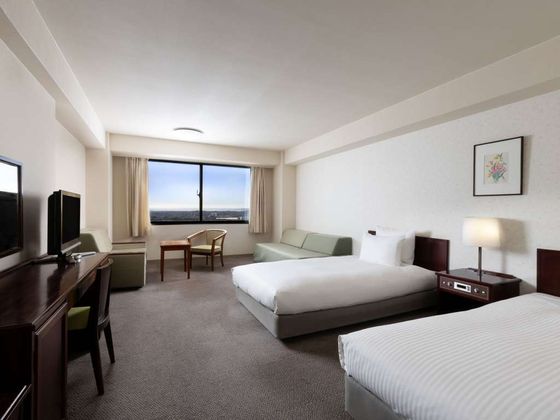
Ise Shima Region - Grand Mercure Ise-Shima Resort & Spa
This serene hotel is located in the coastal town of Shima, in Japan’s Ise-Shima region. Guests enjoy rejuvenating treatments at the on-site spa, panoramic views of Ago Bay from the terrace lounge, and refined Japanese dining...
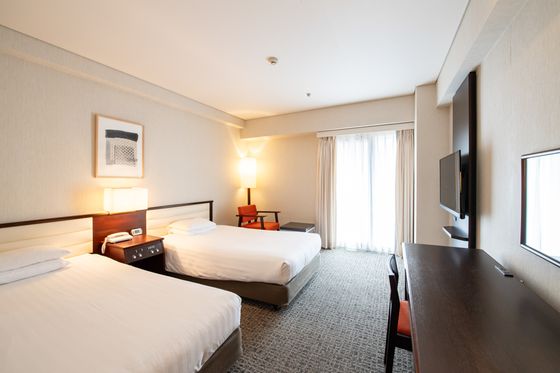
Kyoto - Kyoto Tokyu Hotel
This luxurious hotel is located in Shimogyo-ku. Guests enjoy a fitness center, a spa with relaxing treatments, and three on-site restaurants serving Japanese and Chinese cuisine. Nearby, you'll find Nishi Honganji Temple, Kyoto...
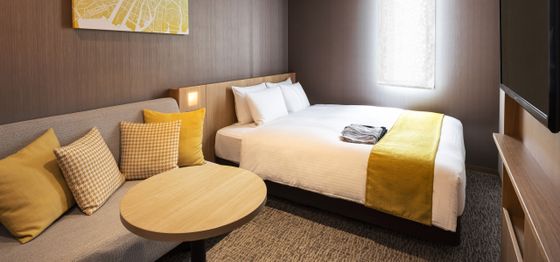
Hiroshima - Hotel Intergate Hiroshima
This contemporary hotel is located in downtown Hiroshima. Guests enjoy a fitness center, an on-site spa with relaxing treatments, and a coffee shop/cafe with local Hiroshima specialties. Nearby, you'll find Peace Memorial Park,...
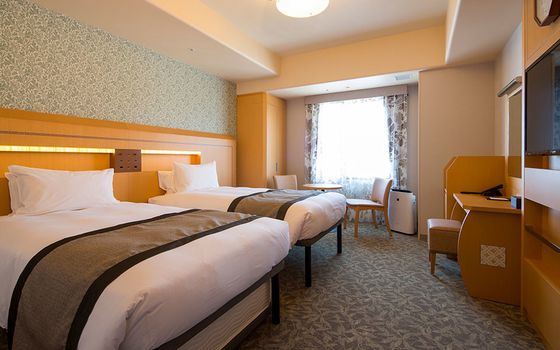
Kobe - Hotel Monterey Kobe
This charming hotel is located near Meriken Park. Guests enjoy a sauna and spa facilities, an on-site restaurant, and comfortable Simmons pocketed coil spring mattresses. Nearby, you'll find Kobe Port Tower, Kobe Harborland...
Flights
Make your journey to and from your tour as smooth as possible by letting our travel experts handle your round-trip flights. We’ll select the best itinerary for you at a great rate, thanks to our airline partnerships.
Your Go Ahead flight package includes:
- A round-trip flight for your tour from your preferred home airport
- An EF representative waiting for you on arrival to whisk you to your hotel
- Your lowest price locked in, so you don’t have to track airfare
- 24/7 on-tour support from our dedicated flights team
- Complimentary luggage retrieval services through Blue Ribbon Bags
- Dedicated flight experts to help arrange early arrivals, longer stays, or upgrades, so every detail fits your travel style
- Stress-free rebooking if your tour itinerary changes
Find out more about flights
FAQ
- Go Ahead’s Tours for Women are intentionally designed group tours for women. On our guided tours, you’ll travel with other women by your side and a woman Tour Director in your destination country to guide you as you go. It’s a perfect opportunity to forge meaningful connections with your travel companions and fellow travelers through shared journeys and bonding experiences.
- You’ll also learn about the history and legacy, and current experiences of women in the countries you visit.
- For other questions, like who can travel on these tours, please visit our Tours for Women page.
- In order to enter Japan, U.S. and Canadian citizens need a valid passport with an expiration date extending at least six months beyond the date of return.
- We recommend having at least two blank passport pages for entry stamps.
- There is no visa required for U.S. or Canadian citizens to enter Japan.
- It is recommended to register your passport, flight, and other travel information at least 72 hours prior to departure through Visit Japan Web to speed up the immigration and customs process upon arrival. Once you’ve completed your information, you will receive a QR code to present upon arrival.
- If you are not a U.S. or Canadian citizen, you must contact Japan’s consulate for your specific entry requirements.
- You can see the most up-to-date entry requirements for the destination(s) you’ll visit on tour by going to goaheadtours.com/entry-requirements and searching the code JP4.
- Round-trip flights booked through Go Ahead Tours arrive in Tokyo and depart from Osaka.
- Transfers to and from the airport at your destination are included for travelers who have purchased their flights through Go Ahead Tours. Travelers who booked their own flights are responsible for securing their own airport transfers.
- When you arrive in Tokyo, a Go Ahead representative will be waiting for you in the arrivals hall with a Go Ahead sign or a sign with your name(s). If you don’t see a representative immediately, please be patient and stay in the arrivals area. They may be assisting another traveler who has also just arrived and will be back shortly.
Physical Activity Level
This is a moderate physical activity-level tour. You can expect to be on the move on a regular basis throughout the course of the tour.
Tour Pacing
This is a steady-paced tour. The pace of a tour itinerary considers how often you’ll switch hotels, the amount of planned daily activities, and how you’ll get from place to place. You can expect:
- Most days full of included activities in a row (more if you add excursions)
- Most transportation by motor coach, some by train
- About four hours of bus time daily
Walking, Terrain & Physical Requirements
- Travelers should be prepared to walk two to three miles per day—this includes city streets, cobblestones, stairs, and hills.
- Stone walkways may be slippery even when dry.
- Access to the higher floors of Himeji Castle on the tour extension requires navigating a series of steep, narrow staircases.
- Travelers should be healthy enough to participate in all included walks without assistance.
- Please note: Adding optional excursions may increase the total amount of walking on your tour.
Climate Considerations
- Temperatures range from 40sF in winter to low-80sF in summer, with occasional heatwaves in the summer months (June-September).
- Summer is the rainy season in Japan and travelers should expect hot, humid days.
Physical Activity & Tour Pace Questions
- Go Ahead Tours and the Tour Director who accompanies your group are unable to provide special mobility or luggage handling assistance to travelers on tour. The responsibility of the Tour Director is to ensure the group enjoys a smooth and informative journey, and they can’t be relied on to provide individualized assistance to any one traveler.
- This tour moves at a reasonable pace to avoid missing scheduled stops. The rest of the group cannot miss any scheduled activities because of the needs of an individual.
- Due to the pace and physical activity level of this tour, mobility aids such as wheelchairs or walkers will be difficult to use and are not recommended. Please notify Go Ahead Tours before your departure if you plan to bring these on tour with you.
- If you have mobility concerns or tour pacing questions, please visit our Help Center or send a message to our Customer Experience Team.
- This tour includes various modes of transportation, including trains and private motor coach. Some modes of transportation will have raised platforms or steps and often not provide access to ramps or lifts.
- A high-speed train transfer from Tokyo to Nagoya is included in the price of your tour. (The tour extension also includes a high-speed train ride from Hiroshima to Kobe.)
- All other included transportation on this tour is by private motor coach.
- Japanese train stations typically operate similarly to airports: Security measures, such as baggage and body scanners, are common. Additionally, platforms are often spread across large distances and require travelers to carry their luggage up and down escalators or stairs. Porterage services aren’t offered and storage space is extremely limited. Please keep in mind that trains may only stop at each station for a few minutes; quick boarding and deboarding may be imperative.
- Please note that our travelers are limited to one checked bag and one carry-on bag per person due to storage limitations on motor coaches.
- Some airlines may impose additional charges if you exceed baggage size and weight restrictions. Be advised that you are responsible for any baggage fees incurred on all flights.
- Contact your airline(s) for baggage size and weight restrictions for your flights.
- Make sure you label your baggage and keep valuables, medication, and documents in your carry-on bag.
- Travelers must manage their own luggage throughout tour as porters are not guaranteed. This includes at hotels and airports.
- You will need a small overnight bag (such as your carry-on bag) for your last night in Tokyo. Your luggage will be transferred for you from Tokyo to your hotel in the Ise Shima region directly.
- We recommend packing lightweight, loose-fitting clothing that can be easily layered to accommodate varying temperatures, as well as a light jacket or rainwear.
- A sturdy pair of walking shoes or sneakers is recommended for sightseeing.
- You may want to pack dressier attire if you plan to visit a high-end restaurant or attend a special performance.
- It is preferable not to visit temples or other religious sites with bare legs and shoulders (and entrance may be denied on this basis).
- We recommend packing a reusable water bottle to cut down on single use plastic waste.
- We recommend packing a universal adapter, as well as a voltage converter if you plan on using your own hairdryer or other device without a built-in converter.
- In case of emergencies, we also recommend packing your medical insurance card in your carry-on.
- Go Ahead handpicks every hotel you’ll stay at, striking a balance between comfort, location, and local charm.
- Specific properties will vary based on your departure date, but are typically three-to-four-star hotels; always include private bathrooms; and usually have in-room safes for valuables. Additionally, your hotels will have Wi-Fi, but access may be limited to common areas. There may also not be elevators.
- Unfortunately, we can’t guarantee that your accommodations will have laundry services or facilities. We recommend checking directly with your hotels once they’ve been confirmed, about 30 days prior to departure.
- Some hotels on this tour are situated on narrow streets; as such, our buses can’t drop you off right out front. In these instances, you’ll have to walk your luggage to the property, no more than a few blocks.
- Please be advised that the strength of the air conditioning in Asian hotels/buildings is often not as strong or as cool as what you might be used to in the U.S. or Canada.
- Japan operates on 100 volts and uses a Type A plug, the same as in the U.S.
- Specific accommodations will vary based on your departure date.
- Guests will fully undress and leave their belongings in the locker room before entering the bathing area, as complete nudity is the traditional and expected practice at Japanese onsens. While some establishments are beginning to offer alternatives for modest visitors (such as designated swimsuit times or private bath rentals), these accommodations remain relatively uncommon.
- Before entering the shared baths, guests must thoroughly wash and rinse themselves at the washing stations. Be mindful of your surroundings to avoid spraying others while washing.
- A small white bathing towel is often provided or available for rent. This versatile towel serves as a modest cover-up when walking between areas, for washing your body, and for drying afterward. While bathing, most guests fold the towel and keep it nearby or place it folded on top of their heads. The bathing towel must never touch the bath water. Shampoo and soap are typically provided, though many guests prefer bringing their own.
- Hair should be worn up and secured to prevent it from touching either your towel or the water.
- Onsens are intended to be relaxing and tranquil environments. Speak quietly and be respectful of others. Swimming, diving, and running are prohibited. You may soak, exit, and reenter the baths at your leisure, though it's recommended not to spend more than 30 minutes in the hot water at one time.
- Dry off completely before returning to the locker room to change back into your clothes.
- Check an onsen's tattoo policy before visiting. While many establishments are becoming more accepting of tattoos—offering cover-up patches or private baths for tattooed guests—many still maintain traditional prohibitions. Although most Japanese people don't personally object to tattoos, many businesses maintain conservative policies regarding visible tattoos.
- Excursions are available for purchase prior to departure, and most excursions will be available for purchase while you are on tour directly through your mobile app for an additional $10 USD.
- We recommend purchasing excursions at least 3 days prior to your tour departure. Please note some excursions have advance booking deadlines. Check your tour itinerary for more information to ensure you don’t miss the deadline to add them.
- Optional excursions may be canceled on tour due to reasons like low enrollment, weather or unexpected closures. If an excursion you signed up for is canceled by Go Ahead Tours, you will be refunded the full cost of the excursion. Please note it may take up to 60 days for your refund to be processed.
- Your Tour Director may offer their own optional excursions which can only be purchased on tour via cash (in local currency).
- At least 60 days prior to departure, check with your doctor or healthcare provider for the latest updates and entry requirements, or visit the Centers for Disease Control and Prevention website at cdc.gov.
- If you have medication that you take daily, be sure you have enough for each day of the tour as well as any possible delays encountered.
- If you have dietary restrictions and/or food allergies please notify Go Ahead Tours at least 30 days prior to departure by logging in to your account and updating your traveler info. To update this information closer to your departure date, please call our Customer Experience Team.
- Most of our itineraries include headsets used during certain sightseeing tours so travelers can hear their guides or Tour Director. If you use an assisted listening device, such as a hearing aid or cochlear implant, please visit our Help Center for more information or contact our customer experience team. Please note that at this time not all our destinations offer headsets due to supplier limitations.
- The water is safe to drink throughout your tour unless posted otherwise.
- This tour includes one lunch and three dinners: They may be set menus, buffets, or family-style meals, depending on the location. Dinners also include one glass of beer, wine, or a soft drink, as well as water.
- Breakfast each morning is also included at the hotel and is typically buffet style with hot and cold options.
- Most Japanese meals are based around rice or noodles with fish, meat, and vegetables flavored with soy sauce and miso. You may recognize popular dishes like sushi, tempura, and hot pot.
- Travelers should expect meals to be delicately balanced in flavor—often lighter, less salty, and less sweet than Western dishes. Presentation is important, with food often served in small, beautifully arranged portions. Many dishes highlight seasonal ingredients and emphasize freshness and umami (a savory taste unique to Japanese cuisine). Raw fish (like sashimi and sushi) is common, and some textures—such as slimy (e.g., natto or grated yam) or chewy (e.g., mochi or squid)—may be unfamiliar. Meals are typically served with multiple small side dishes rather than one large main course, and it's customary to eat with chopsticks. Western-style substitutions may be limited outside major cities, so adventurous eaters will get the most out of the experience.
- Breakfast often includes rice, miso soup, grilled fish, and pickled vegetables. Lunch might be a bento box with rice, meat or fish, vegetables, and sometimes fruit. Dinner usually consists of rice, miso soup, a main dish (like fish or meat), and several side dishes (vegetables, pickles).
- For more traditional dishes, you'll want to try Sushi (vinegared rice with raw fish, vegetables, and seaweed), tempura (battered and deep-fried seafood or vegetables), sashimi (thinly sliced raw fish or seafood), ramen (noodle soup with meat, vegetables, and various toppings), and yakitori (skewered and grilled chicken).
- Be sure to try some Japanese specialties like the Kaiseki (a multi-course meal showcasing seasonal ingredients and culinary techniques), okonomiyaki (savory pancake with various ingredients like cabbage, meat, and seafood), takoyaki (ball-shaped snacks filled with octopus), natto (fermented soybeans often eaten with rice), and matcha (powdered green tea used in tea ceremonies and desserts).
- At the conclusion of your tour, it is customary to offer your Tour Director and driver a gratuity in local currency. Please keep current exchange rates in mind.
- We recommend tipping $10USD to $12USD per person per day for your Tour Director and $4USD per person per day for your driver.
- If applicable, we also recommend $2USD per local guide.
- Tips can only be paid in cash.
- If you are traveling to multiple countries with different currencies and the same Tour Director, ask them what currency they prefer for their tip.
- The cost of porterage is included in your tour price, and it is not necessary to tip baggage handlers.
- You will use the Japanese yen in Japan.
- Better rates of exchange are usually available overseas, although it’s worth ordering some currency from your local bank to use when you first arrive.
- We strongly advise that you take debit and credit cards, which can be used to withdraw cash at local banks as needed.
- You can use most cards at ATMs on the international networks Cirrus and Plus, but make sure to check with your home bank about withdrawal fees.
- International banks and businesses primarily accept debit and credit cards that work with the EMV chip system. If you don’t already have at least one card with a chip in it, we strongly recommend requesting one from your bank prior to your tour.
- Plan ahead and bring cash to tip your Tour Director, local guides, and bus drivers.
- To help you feel prepared before traveling on tour, we strongly recommend downloading the EF Go Ahead Tours mobile app. It’s free and provides information about important deadlines and entry requirements, as well as your detailed itinerary, packing tips, and more. You can also connect with fellow travelers through the app’s chat feature.
- Wi-Fi is available in most hotels, though some charges may apply.
- There is no Wi-Fi on any of the motor coaches.
- Please contact your mobile service provider for information on roaming charges.
- Your Tour Director will be leading your group throughout your journey. You will have the same Tour Director throughout your tour.
- The role of the Tour Director is not only to provide information and context on the destinations you visit, but also to confirm services, coordinate inclusions, prepare each days’ activities and support travelers while on tour. As such, they must focus on the success of the group, and cannot provide individualized assistance to any one traveler.
- One of the benefits of traveling with EF Go Ahead Tours is our on tour emergency support team.
- Our extensive network of offices around the world, and our integration of ISO 31000: Risk Management Guidelines, help our dedicated 24/7 Emergency Service teams anticipate and address on-tour challenges in a flexible and iterative way.
- This team supports travelers and Tour Directors using a combination of extensive training, simulations, incident response planning, and decades of experience to help manage emergencies if they arise, ranging from personal health concerns or injuries to major world events.
- As needed, On Tour Support can facilitate additional support for travelers on tour, arrange assistance from outside specialists, and liaise with local and international authorities to help solve on-the-ground issues. In addition, the team is dedicated to supporting and facilitating communication between travelers and families in the event of an emergency while on the road or at home.
- Japan is 13 hours ahead of Eastern Time (ET).
- When it’s noon in New York, it's 1am on the following day in Japan.
- When you travel with Go Ahead Tours, you’ll make a positive impact on the places you visit and the people and animals you meet along the way. That’s because our three core Responsible Travel commitments—protecting the environment, supporting local communities, and promoting animal welfare—are at the heart of every tour we offer.
- Travel, when done responsibly, can have an enormous socioeconomic impact on communities. To maximize your impact, eat at locally owned restaurants and shop at small businesses. Ask your Tour Director to point out restaurants they recommend.
- Prepare for your trip: Be aware of monetary norms such as tipping and negotiating in a market; learn about the destination’s forms of etiquette; and take some time to learn a few words in the local language.
- When interacting with locals, make sure to ask people for permission before you take their picture, and approach cultural differences with empathy and an open mind.
- Go Ahead Tours encourages travelers to limit their waste while on the road, especially single-use plastics. You can cut back on generating plastic waste by packing your own toiletries, using electronic documents, and bringing a reusable water bottle and shopping bag. If you need to use plastics or paper, please recycle.